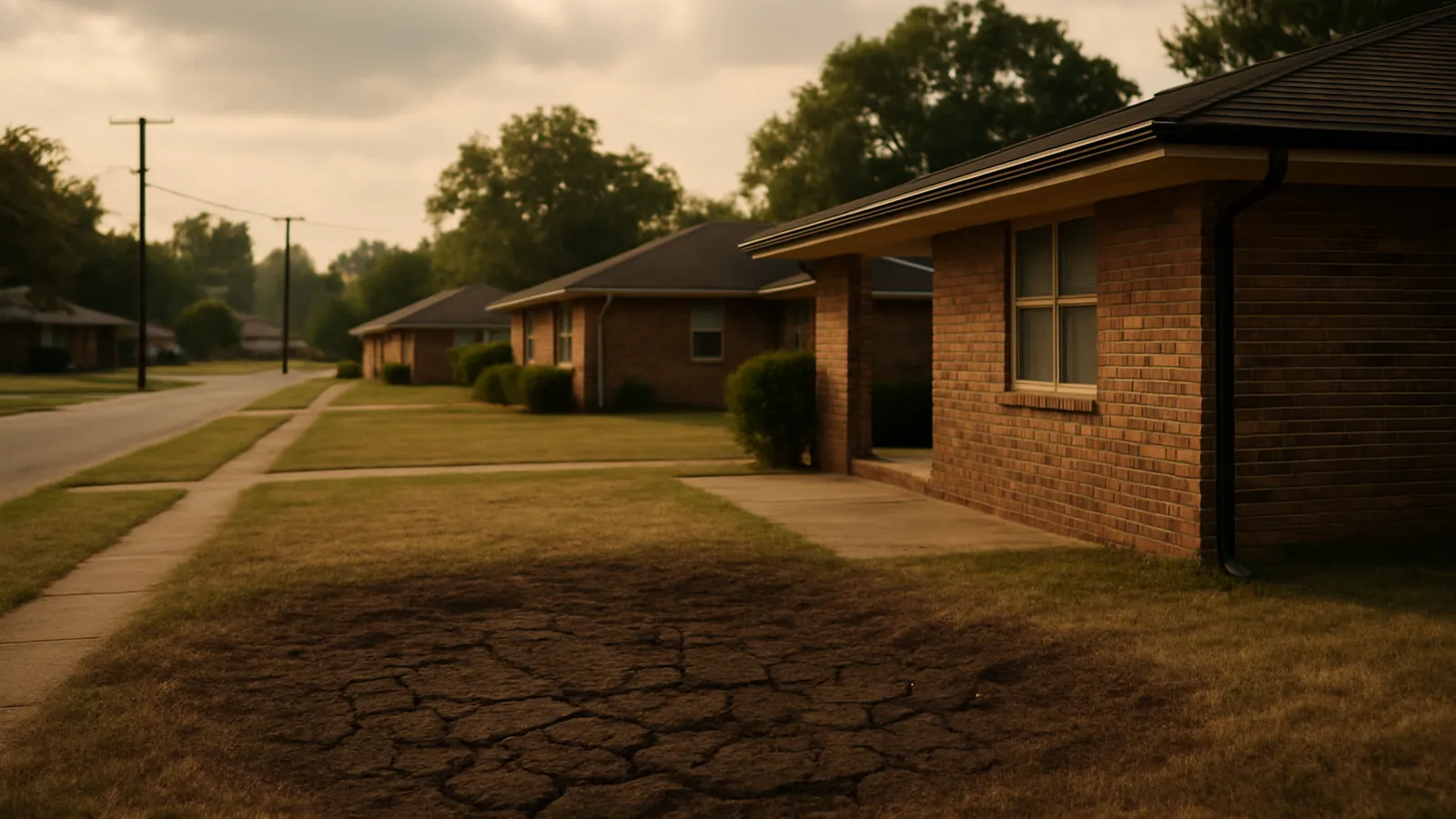
Foundation piering in Jackson runs $4,000–$15,000 for most full repairs, with piers commonly $1,200–$3,000 each. Piers are driven below the active Yazoo clay zone to stable bearing, because that clay swells more than 200% and exerts over 25,000 lb/ft².
What Yazoo clay actually does, why depth is the whole design question, and what a real pier bid contains.
The most aggressive soil in the Southeast
Central Mississippi sits on the Yazoo Formation of the Jackson Group — a mineral-rich elastic clay running in a belt roughly forty miles wide and a hundred and twenty miles long. It is documented to swell more than 200 percent as it takes on water and to exert pressures exceeding 25,000 pounds per square foot against whatever stands in its way. For scale, that is more force per square foot than most residential foundations are designed to carry downward, applied upward and sideways by dirt.
This is why Jackson is not simply another expansive-clay market. Reporting indicates that up to 65% of homes in the metro area have sustained some degree of Yazoo clay movement damage. It is also implicated in the sinkholes the area sees. When a homeowner here says the house is moving, the prior probability is genuinely high — and the honest response is to measure rather than to reassure.
Why depth is the entire design question
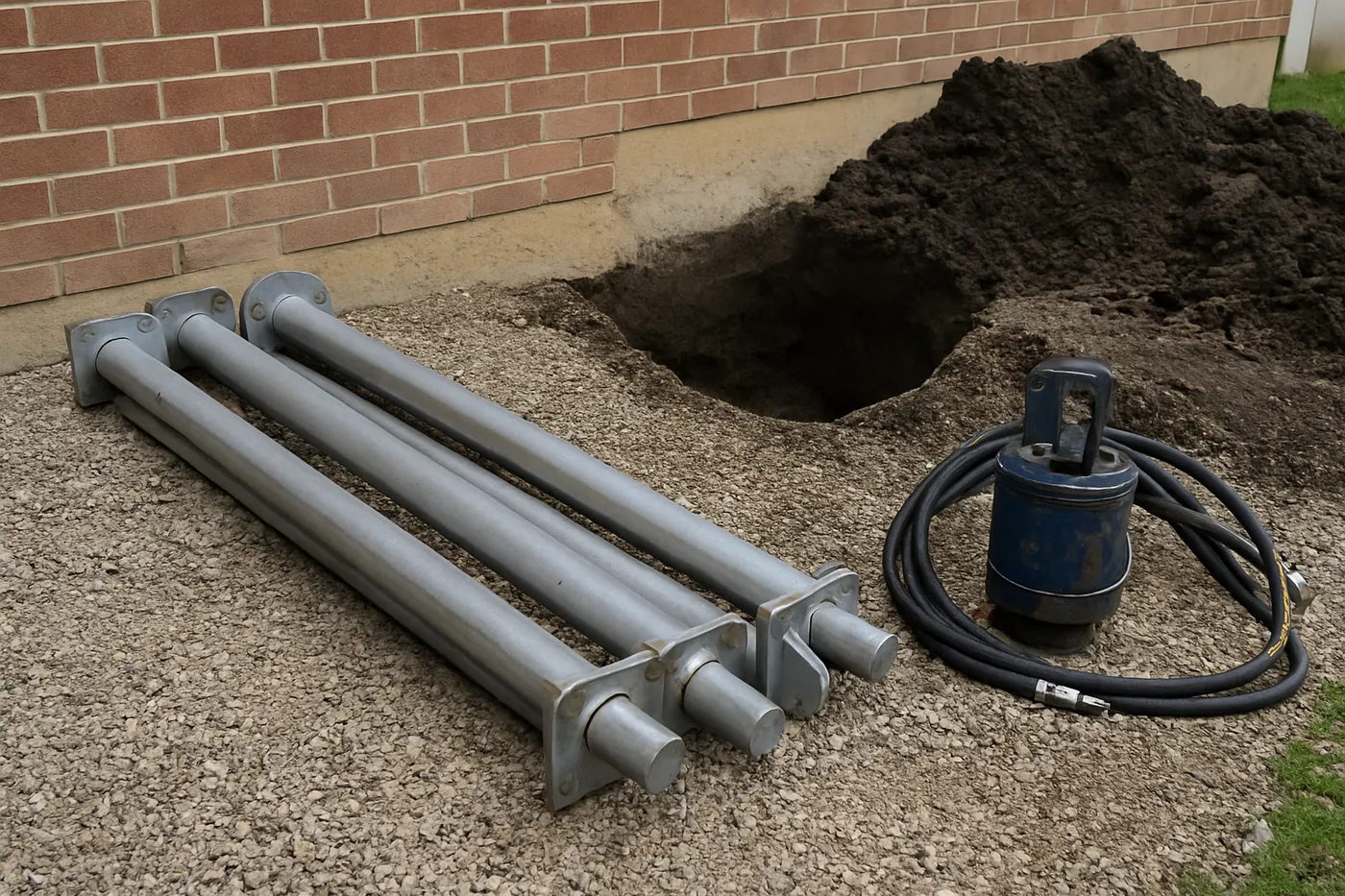
On ordinary expansive soil, a pier clears the active zone within a fairly predictable range. The Yazoo Formation is a thick deposit, so a pier that stops inside it is still bearing on material that swells, pushes, and cycles. That is the single most consequential difference between a pier job that holds here and one that does not, and it is invisible in a written quote unless the company commits to driving to refusal or to a tested capacity below the active zone.
How the pier design gets decided
| Step | What it produces | Why it matters |
|---|---|---|
| Elevation survey | Floor heights across the slab, in inches | Pier count and placement come from this, not crack photos |
| Depth to stable bearing | Refusal depth or tested capacity | Must clear the Yazoo zone — the local make-or-break |
| Exterior water reading | Where roof and lot water goes | Water is what activates the clay — see drainage |
| Pier type selection | Push vs. helical by load | Structure weight decides what can be installed properly |
| Lift target | How much elevation to recover | Stabilize first; lift only as far as finishes tolerate |
What the install looks like at your house
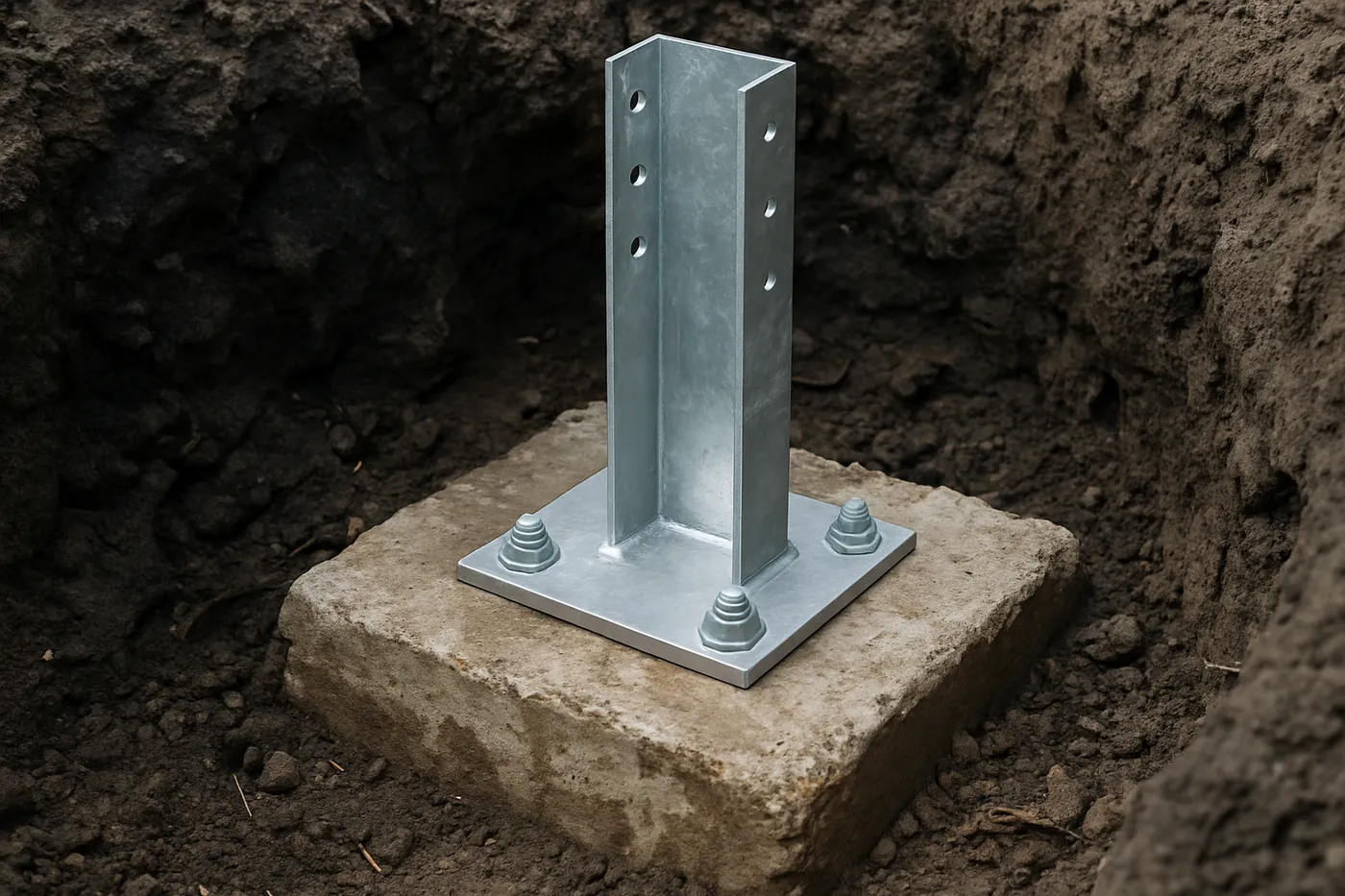
Most residential pier jobs run two to five days and nearly everyone stays home. Expect excavation at the footings, equipment in the yard, and noise during working hours. Each pier is driven, load-tested, and logged — and on this soil that log matters more than anywhere else we work, because refusal depth is the record proving the pier actually got below the active clay. A pier job with no depth record is a promise with nothing behind it.
The first year after the piers
Piers stop the movement where they are; they do not change the clay elsewhere. Give the house a full wet-and-dry cycle before chasing cosmetics and you patch drywall and re-point brick once instead of twice. Monitor for free meanwhile: a dated photo and a pencil line across each crack answers “did it move?” in ten seconds. Then keep water away from the perimeter and consistent through dry stretches — on Yazoo clay, uneven wetting is what generates the pressure in the first place, and the unpiered sections are still sitting on it. Keep the pier log with your closing documents; a Jackson buyer’s inspector will find the brackets regardless, and paperwork turns a red flag into a selling point. Prices are in the cost guide.
Piering questions, straight answers
What does foundation piering cost in Jackson?
Most full repairs run $4,000-$15,000, with individual piers commonly $1,200-$3,000 each. On Yazoo clay, depth is the variable that moves the number - piers have to reach below the zone where the clay is still active, and that depth varies across the metro. The elevation survey is free.
How deep do piers have to go through Yazoo clay?
Past the active zone, which here can be substantially deeper than in ordinary expansive-clay markets. The Yazoo Formation is a thick deposit, and a pier that stops inside it is still sitting on material that swells and pushes. We drive to refusal or to a load-tested capacity in stable bearing rather than to a fixed depth.
Can piers actually resist 25,000 pounds per square foot?
Piers are not designed to resist swell pressure - they are designed to bypass it. The point of underpinning is to transfer the structure's load below the zone where that pressure is generated, so the house is supported by material that is not participating in the wet-dry cycle. Fighting the clay is not a strategy; getting under it is.
Push piers or helical piers?
Push piers use the house's weight to drive to load-bearing strata and suit heavier masonry homes. Helicals screw in to a measured torque, which makes them right for lighter structures, porches, and additions that cannot supply reaction weight. Depth requirements here mean pier selection deserves real engineering, not a default.
Will piering stop the movement completely?
Where the piers are, yes - the supported section transfers load below the active clay. What piering does not do is change the soil under the sections nobody piered, which is why the scope has to be designed from a survey rather than from where the cracks happen to show.
Get a free Jackson foundation evaluation
Tell us what the house is doing — stair-step cracks, doors that stick every August, sloping floors, separating trim — and we’ll schedule an evaluation with photos and measurements. We reply the same business day.