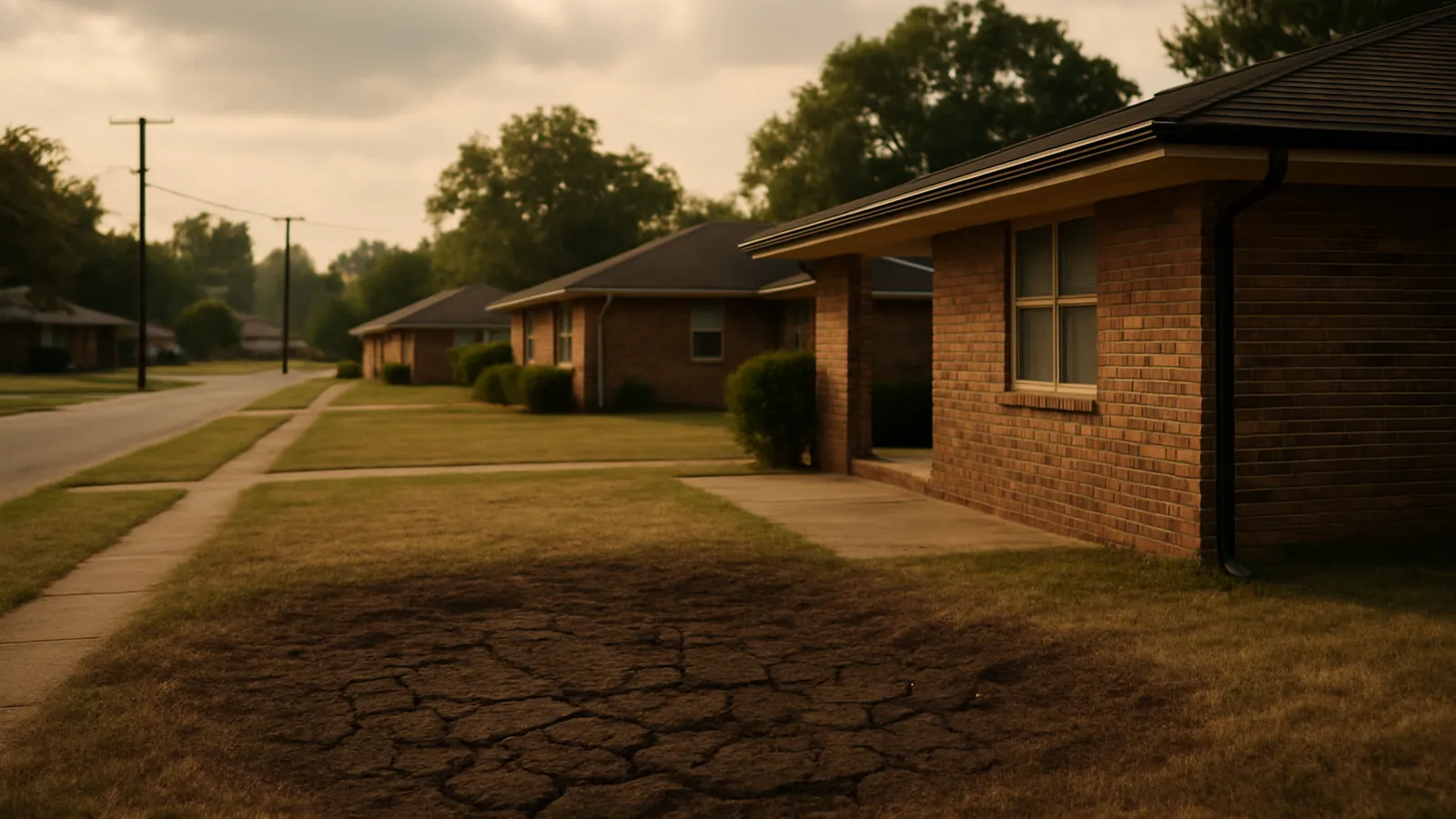
Foundation crack repair in Jackson runs $400–$1,500 for sealing and injection. The price assumes movement is addressed first — sealing a crack while Yazoo clay is still pushing produces a line that reopens after the next wet stretch.
How to read a crack, which patterns mean pressure, and the free measurement that tells you the truth.
Reading the crack before sealing it
| Pattern | Usual meaning | What it needs |
|---|---|---|
| Hairline vertical, slab or block | Concrete shrinkage — cosmetic | Seal, monitor |
| Stair-step through brick mortar | Differential movement | Elevation survey first |
| Horizontal crack in a wall | Lateral pressure — the Yazoo signature | Structural assessment, promptly |
| Wider than a quarter inch | Meaningful movement, not shrinkage | Survey before any sealing |
| Opened quickly after heavy rain | Clay taking on water and swelling | Check drainage first |
| Unchanged for years | Old scar — movement finished | Seal and be done |
Why horizontal cracks rank differently here
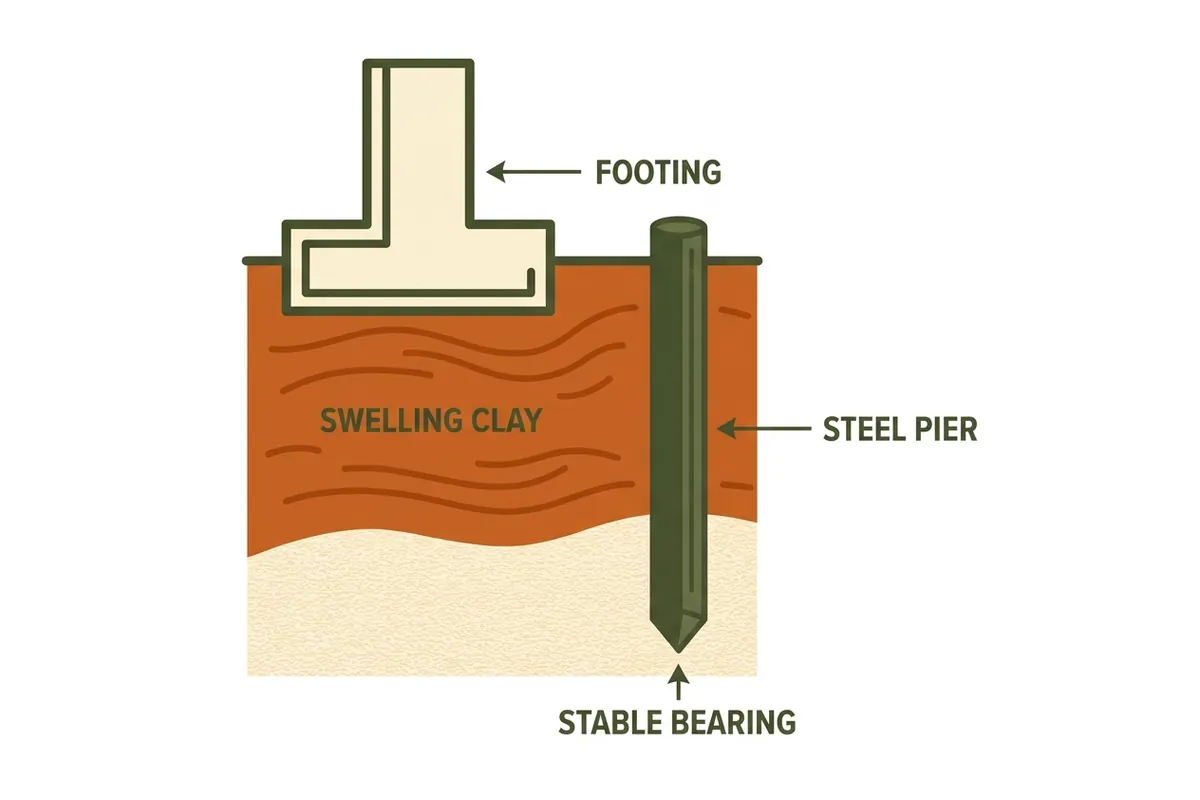
In most markets a horizontal crack is a serious but uncommon finding. On the Yazoo Formation it is the mechanism’s own signature. Clay that swells against a wall applies lateral force, and this clay applies more of it than almost any soil in the country. A horizontal crack means something is pushing sideways on a wall that was designed to carry weight downward — which is a different and more urgent conversation than a stair-step crack, and one worth having with a structural engineer if the wall is also bowing.
The measurement anyone can take for free
Before you pay anyone to interpret your crack, collect the data yourself. Photograph it with a coin or tape for scale and note the date. Draw a pencil line straight across the crack and date that too. Then look again after a genuine wet-to-dry swing — in central Mississippi that means checking after a wet stretch and again after a dry one. If the pencil line has separated, the house is moving and sealing changes nothing. If it has held through a full cycle, you very likely have a scar rather than a symptom, and the honest scope is a few hundred dollars.
How the repairs actually differ
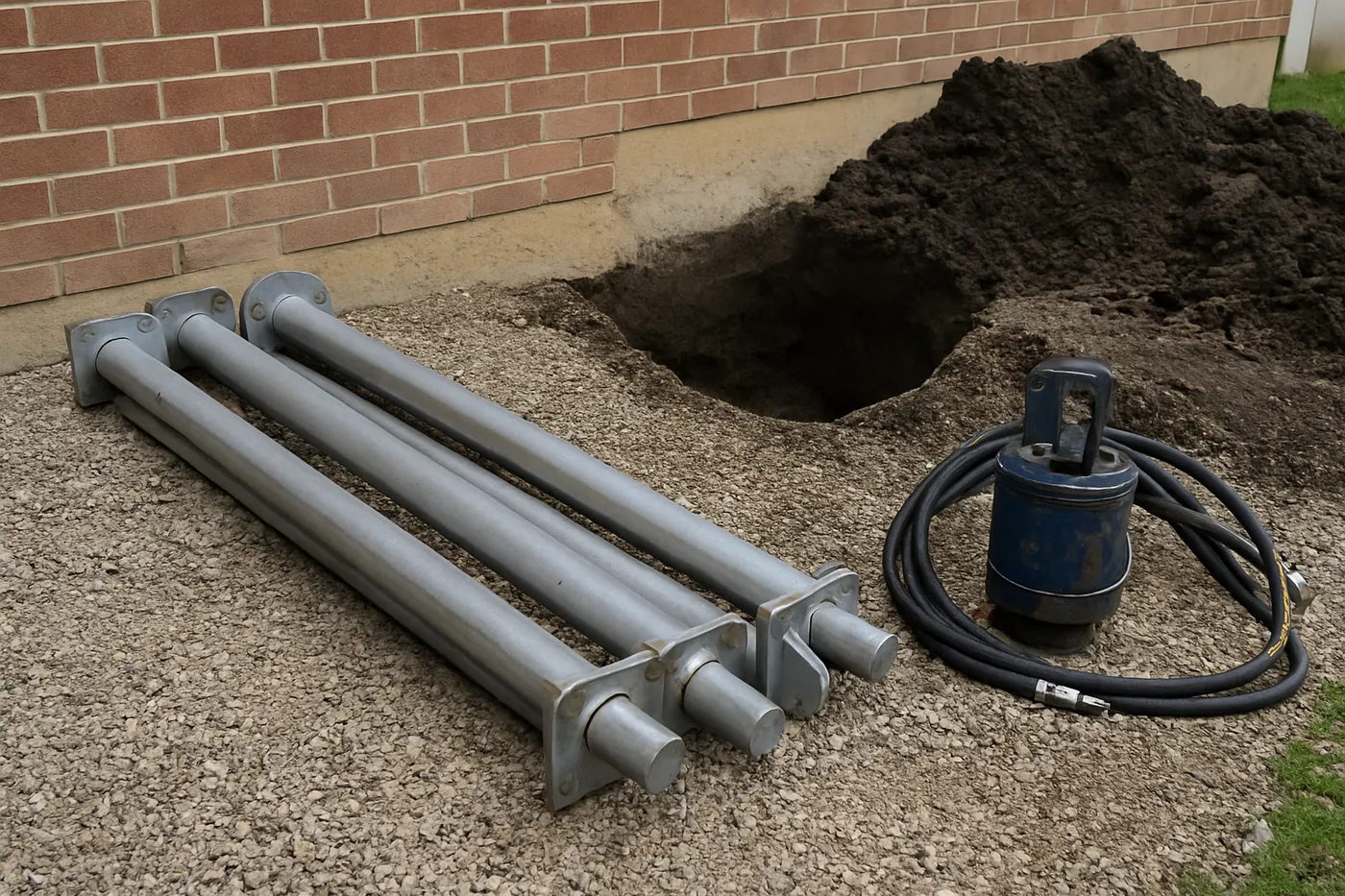
Epoxy injection is structural — it bonds the faces of a crack in poured concrete back into something that carries load, appropriate when movement has finished. Polyurethane injection stays flexible and functions as a water stop, the right choice where the crack leaks and may still move slightly. Surface sealing and mortar repointing is cosmetic and honest as long as it is called that. The wrong choice is usually not the material; it is applying any of them to a foundation nobody surveyed. Where the survey does show movement, the sequence is: correct the water, stabilize with piers where the numbers justify it, then repair cosmetics after a full cycle. Prices are in the cost guide.
Crack questions, straight answers
Which foundation cracks matter in Jackson?
Width, direction, and change - not length. Hairline vertical cracks are usually shrinkage and cosmetic. Stair-step cracks through brick mortar, horizontal cracks, anything wider than a quarter inch, and anything growing month over month indicate real movement and deserve an elevation survey before sealing.
What does crack repair cost here?
Sealing and injection typically runs $400-$1,500 depending on length and method. That price assumes the movement behind the crack has been addressed - injecting a crack on a foundation that Yazoo clay is still pushing produces a neat line that reopens after the next wet stretch.
Is a horizontal crack serious?
It is the one to take seriously fastest. Horizontal cracking in a wall indicates lateral pressure, and on soil that generates over 25,000 pounds per square foot when it swells, lateral pressure is exactly what this ground produces. That deserves a structural assessment promptly rather than a tube of sealant.
Do cracks always mean I need piers?
Cracks don't always mean you need piers, and we will say so when they do not. Plenty of Jackson cracks record movement that stabilized years ago, and plenty trace to a single drainage problem that can be corrected for a fraction of a pier job. The elevation survey separates active movement from old scars.
How do I tell if it's still moving?
Free, and you do it yourself. Photograph the crack with something for scale, note the date, and draw a pencil line straight across it. Check again after a full wet-to-dry swing. If the line has separated, the house is moving. If it has not, you likely have a scar rather than a symptom.
Get a free Jackson foundation evaluation
Tell us what the house is doing — stair-step cracks, doors that stick every August, sloping floors, separating trim — and we’ll schedule an evaluation with photos and measurements. We reply the same business day.