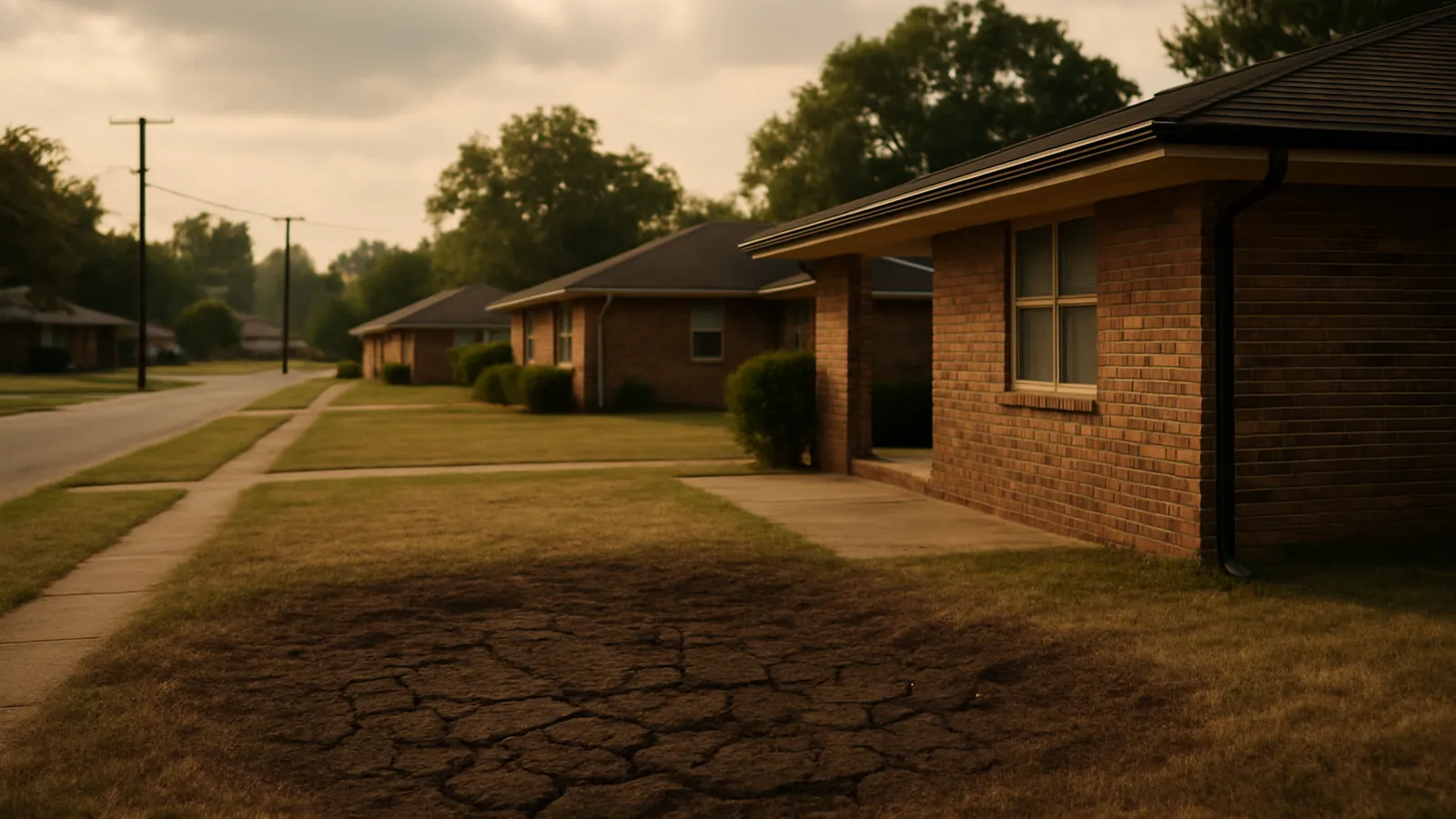
Helical and push piers both run $1,200–$3,000 each in Jackson, within full repairs of $4,000–$15,000. Push piers drive to refusal under house weight; helicals screw to a measured torque. Both must reach below the active Yazoo clay zone, which is deeper here than in ordinary clay markets.
How each proves capacity, why depth dominates the design, and how to read a Jackson pier bid.
Two proofs of the same promise
Both systems transfer your house’s load past the clay that swells and pushes, down to material that does not participate in the cycle. They differ in how they demonstrate they got there. A push pier is hydraulically driven using the structure’s weight as the reaction force and stops when it refuses to advance — that refusal, achieved under the real load of your house, is the proof. A helical pier is screwed in while installation torque is monitored, and torque at depth correlates to capacity. One proves itself by resistance, the other by measurement.
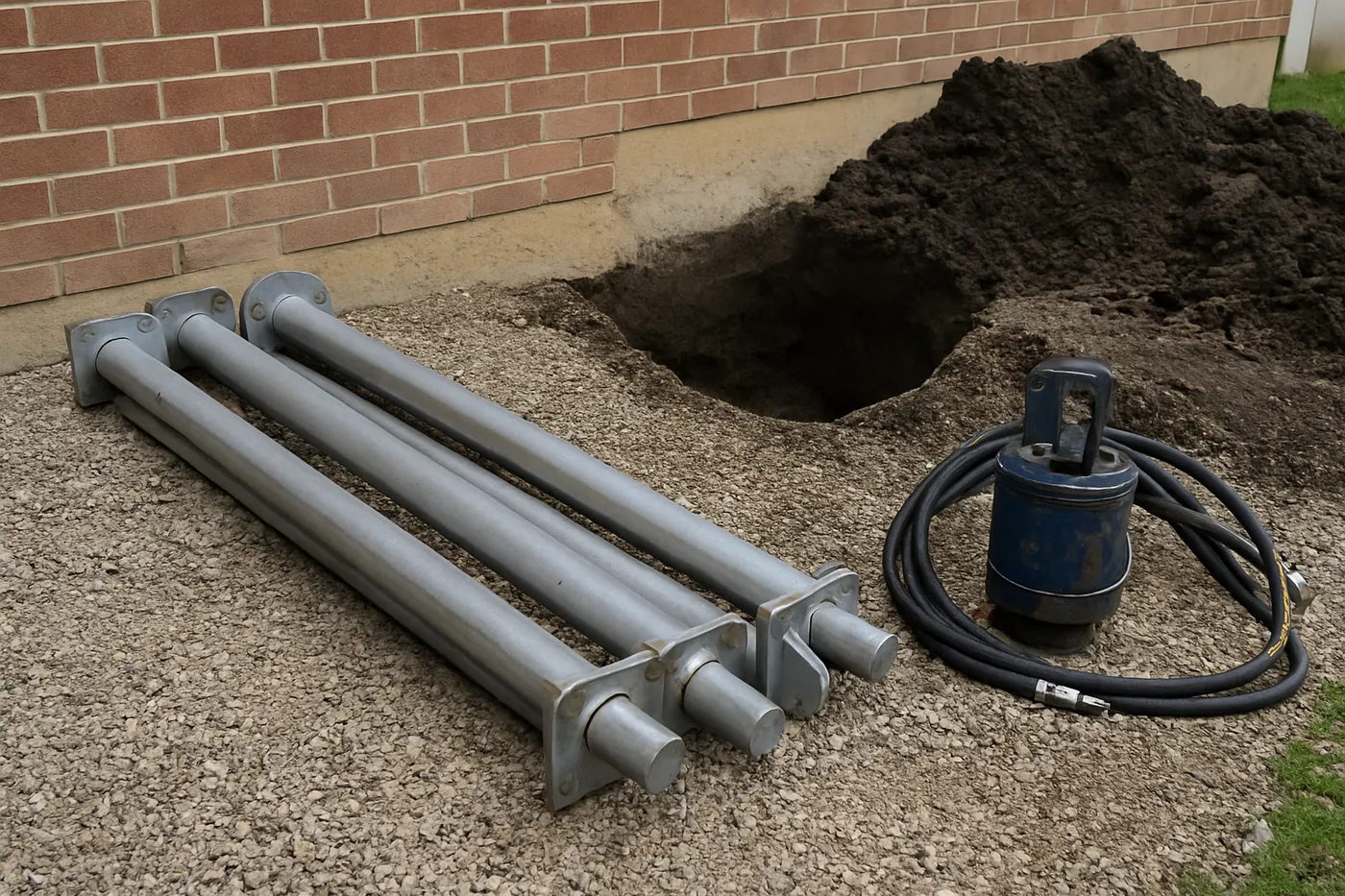
Side by side
| Push piers | Helical piers | |
|---|---|---|
| Proof of capacity | Driven to refusal under house weight | Installation torque logged at depth |
| Needs structure weight | Yes — that is the reaction force | No — torque comes from the machine |
| Best for | Brick-veneer slab homes, heavier masonry | Porches, additions, light framing, tight access |
| Typical Jackson use | The main house | Stoops, garages, room additions |
| Per-pier cost | $1,200–$3,000 | $1,200–$3,000 |
Why depth dominates every other question here
In most expansive-clay markets, pier type is the interesting decision. On the Yazoo Formation it is secondary to a blunter question: did the pier get out of the active clay at all? This is a thick deposit, and a pier that terminates inside it is bearing on material that will swell and push against the very structure the pier was installed to protect. A bid that specifies a pier type but commits to no depth standard has skipped the only variable that decides whether the repair holds. Ask what refusal criterion or tested capacity the crew will work to, and ask to see the log afterward.
What the pier warranty is actually worth
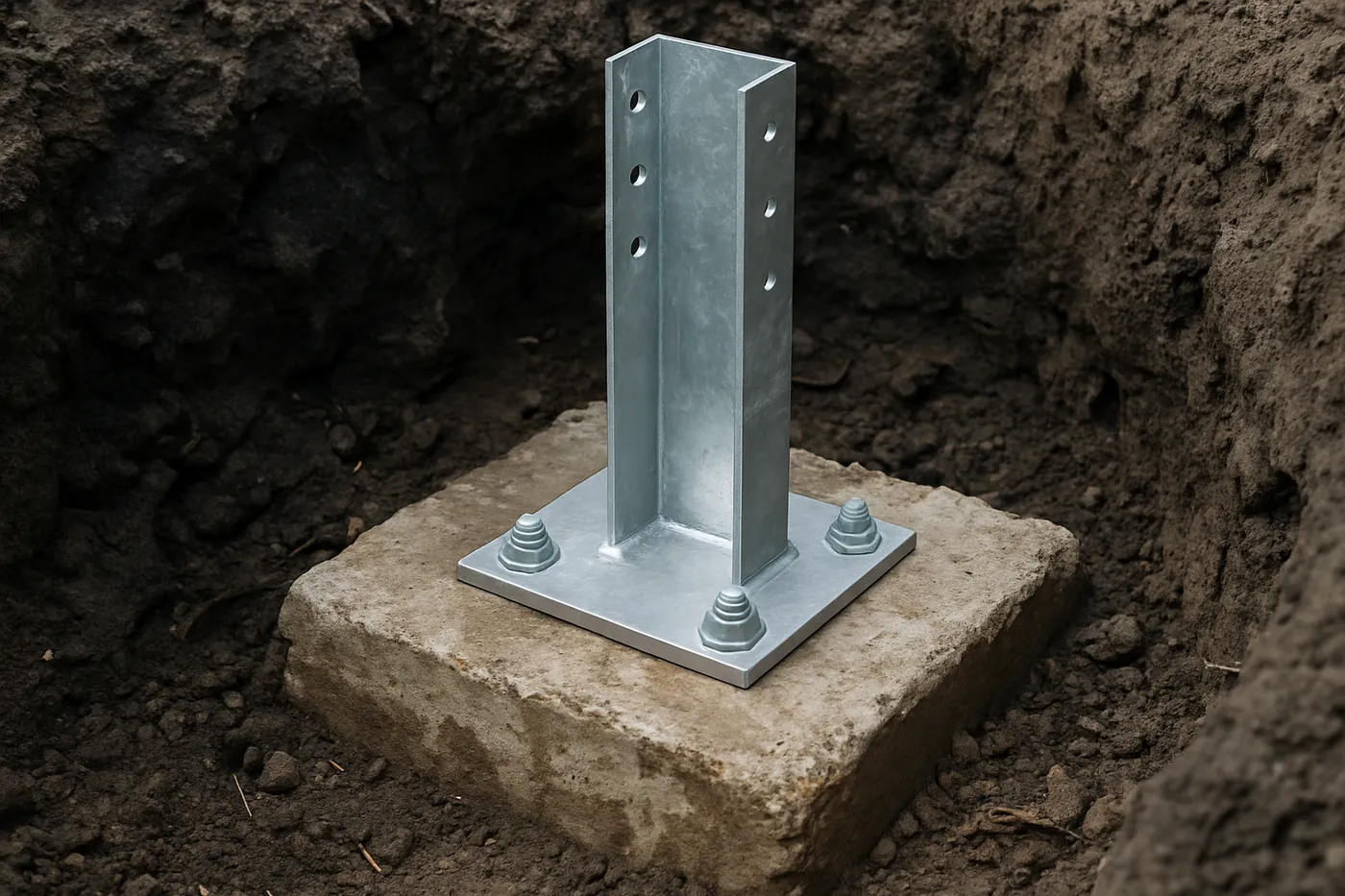
Read the warranty before the price. It covers the piers’ capacity — the supported section carrying its design load — not the whole house, and not sections nobody piered. Four questions separate a real warranty from a brochure: is it transferable to the next owner, does a transfer cost a fee, does it cover the piered section or the structure, and does it survive the contractor closing its doors (third-party-backed warranties do). On this soil, ask a fifth: whether it is conditioned on drainage or moisture maintenance you owe — a fair clause, and the one homeowners meet for the first time during a claim. Keep the depth and torque log with it, because on Yazoo clay the depth each pier reached is the entire reason the paper means anything.
Pier questions, straight answers
Do the two pier types cost differently in Jackson?
Not dramatically per pier - both land in the $1,200-$3,000 range - but totals differ because depth here is greater than in ordinary clay markets. Piers must reach below a thick active zone, so the number of sections per pier, not the pier type, is frequently what moves the price.
Which type fits a typical Jackson home?
Usually push piers on brick-veneer slab homes, which have the weight to drive resistance piers to load-bearing strata. Helicals earn their place on lighter structures, porches, additions, and stoops that cannot supply the reaction weight a push pier needs. The survey and the structure decide, not preference.
What proves a pier actually got below the Yazoo zone?
The log. For push piers it is refusal depth achieved under the weight of your house; for helicals it is installation torque at depth, which correlates to capacity. Either way you should receive a per-pier record - on this soil that document is the difference between an engineered repair and hopeful steel.
Can both types be used on one house?
Frequently, and a bid that mixes them thoughtfully is usually a good sign: push piers under the heavy original footing, helicals under a lighter addition or porch, one warranty, both logs. What you do not want is a company installing one type everywhere because it is the only equipment they own.
How deep do piers go here compared to other cities?
Deeper, often meaningfully so, because the Yazoo Formation is a thick deposit and a pier stopping inside it is still bearing on clay that swells. That is why we drive to refusal or tested capacity rather than to a fixed depth, and why anyone quoting a standard depth before surveying is quoting from a price list.
Get a free Jackson foundation evaluation
Tell us what the house is doing — stair-step cracks, doors that stick every August, sloping floors, separating trim — and we’ll schedule an evaluation with photos and measurements. We reply the same business day.