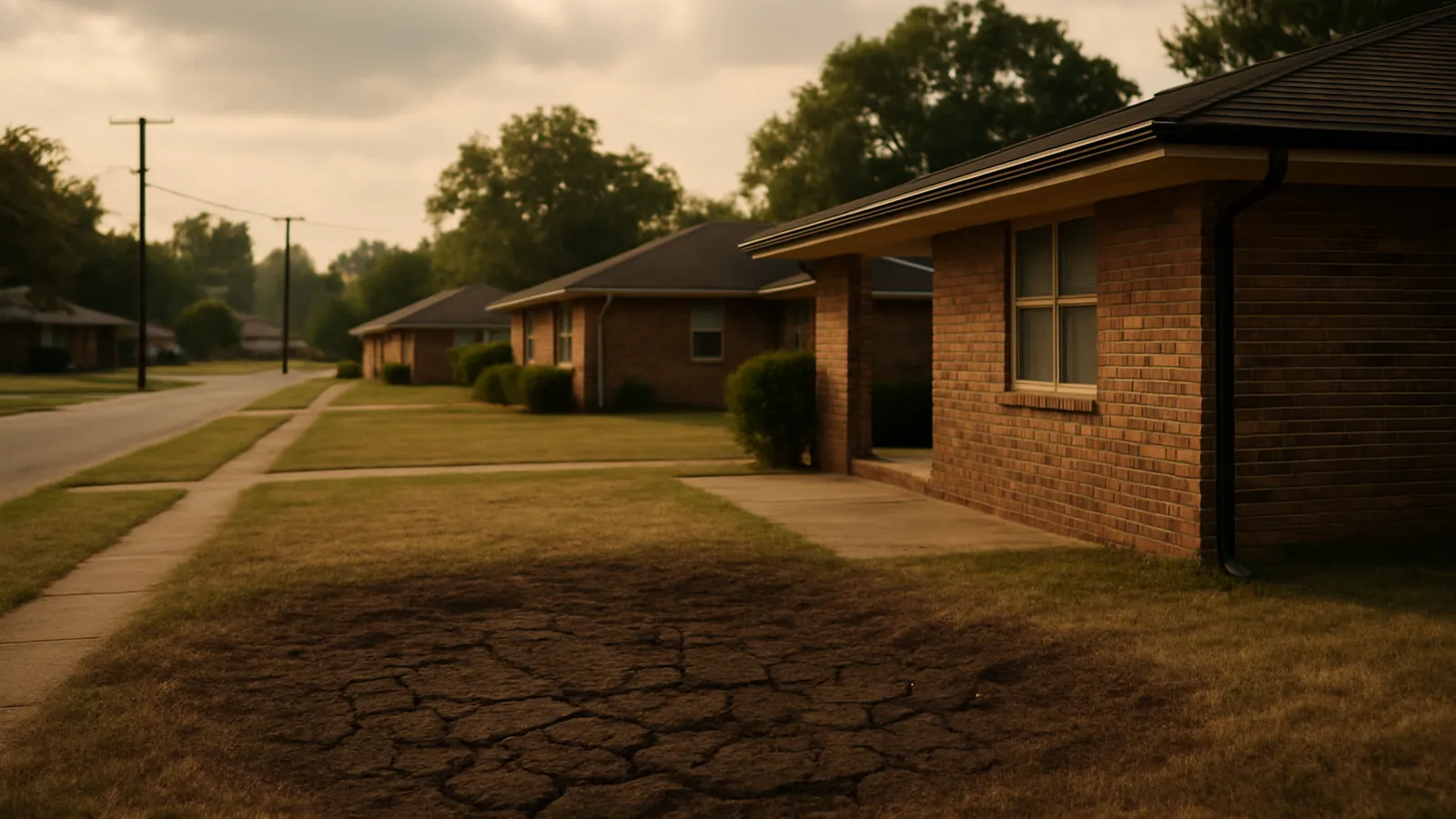
Settlement and heave repair in Jackson runs $4,000–$15,000, with piers at $1,200–$3,000 each. An elevation survey decides which direction the house moved — Yazoo clay swells over 200% and pushes at more than 25,000 lb/ft², so heave is as common here as settlement.
How the survey distinguishes them, why this soil is different, and what each scope actually involves.
Two directions, one soil
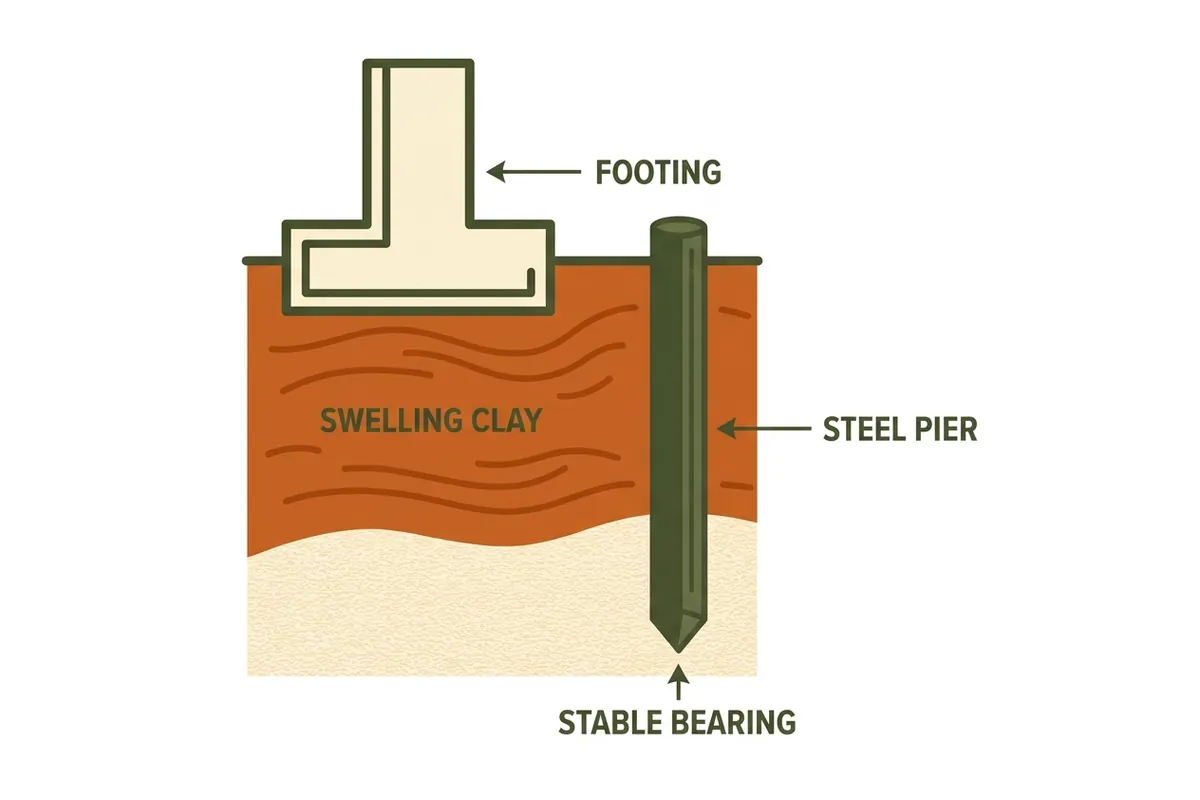
Foundation repair almost everywhere means arresting downward movement. Central Mississippi is the exception, because the Yazoo Formation does not merely fail to support a house — it actively lifts it. As the clay takes on water it expands by more than 200 percent of its volume and generates pressures exceeding 25,000 pounds per square foot. A residential slab weighs nothing against that.
So a Jackson house can be low in one place and high in another, sometimes simultaneously: a perimeter that dropped during a dry stretch while the shaded slab center lifted as moisture accumulated beneath it. Cracks alone cannot tell you which is which, and the repairs are not the same. That is why every honest scope in this metro starts with elevation numbers.
What the survey numbers usually mean
| Reading | Typical interpretation | Usual response |
|---|---|---|
| Under 1/2 inch across the span | Within normal construction tolerance | Correct water, monitor |
| Low zone at a corner or edge | Settlement — support lost below | Piering that zone |
| High zone toward the slab center | Heave — clay swelling underneath | Moisture control first, then support |
| Both, in different areas | Differential wetting across the lot | Drainage plus targeted structure |
| Localized dip or rise with a wet spot | Suspect plumbing, not the seasonal cycle | Static test before any repair |
Why heave changes the order of work
With settlement, the sequence is straightforward: support the low area and lift it back toward level. With heave the first move is not structural at all — it is removing the water driving the swell, because piering around a section the clay is actively pushing upward fights the soil instead of bypassing it. That means drainage, plumbing tests, and irrigation changes come before anyone prices steel, and it is one of the clearest ways to tell whether a Jackson contractor understands the ground they are standing on.
The first year after the repair
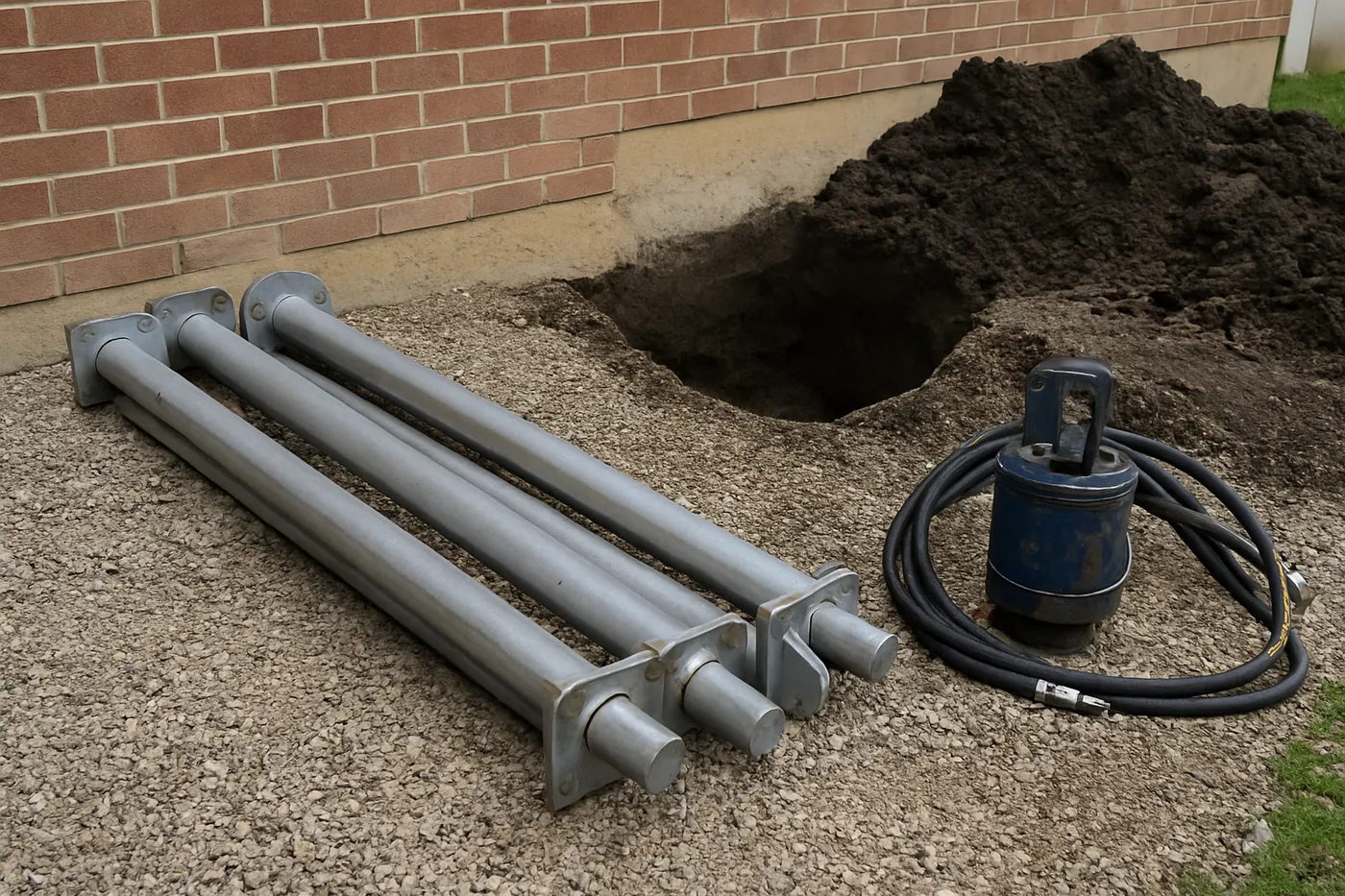
Stabilization stops the movement where the work was done; it does not change the clay elsewhere. Give the house a full wet-and-dry cycle before chasing cosmetics and you patch once instead of twice — hairline cracks can breathe through that swing, which is normal. Monitoring is free: a dated photo and a pencil line across each crack settles the question in ten seconds. Then hold the perimeter moisture as even as you can manage, because on this soil the damage comes from swings rather than from any particular level. Keep the pier log and the survey with your closing documents; in a metro where most houses show some movement history, documented and stabilized is a far better story at resale than undocumented and quiet.
Settlement and heave questions, straight answers
Is my house settling or heaving?
An elevation survey answers it, and the distinction changes everything. Settlement reads as a low zone relative to the rest; heave reads as a high one, often near the center of a slab. On Yazoo clay heave is common because the soil pushes up with more force than the house weighs, which is the reverse of most markets.
What does settlement or heave repair cost in Jackson?
Most full repairs run $4,000-$15,000, piers $1,200-$3,000 each. Pier count comes from how much of the structure has moved and how far, which the free elevation survey establishes before anyone quotes. Heave scopes sometimes weigh moisture control more heavily than pier count.
Why is this worse in Jackson than other cities?
The Yazoo Formation. It swells more than 200% and exerts over 25,000 pounds per square foot - among the most aggressive residential soils in the country - and it runs in a belt about 40 miles wide by 120 miles long through central Mississippi. Reporting indicates up to 65% of metro homes show some movement damage.
Can heave be reversed?
Partially and carefully. Removing the moisture source that caused the swell allows some recovery over time, and supporting the sections that stayed low recovers more. Forcing a heaved slab back to perfectly flat cracks finishes on the way, so the goal is tolerance and stability, not a level floor you could roll a marble across.
Should I get an engineer?
For a contested diagnosis, a purchase, or bids that disagree, yes. An independent structural engineer costs a fraction of the repair and has no stake in the scope. Ask for an elevation survey in numbers, a stated cause, a remedy specifying pier depth or capacity, and a stamp - a letter describing your cracks is a document, not an opinion.
Get a free Jackson foundation evaluation
Tell us what the house is doing — stair-step cracks, doors that stick every August, sloping floors, separating trim — and we’ll schedule an evaluation with photos and measurements. We reply the same business day.